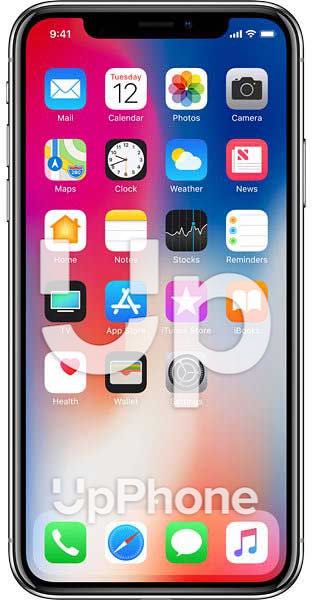
The Apple iPhone X 64GB redefined the smartphone with its edge-to-edge Super Retina OLED display, Face ID, and the powerful A11 Bionic chip — a landmark device that set the template for a decade of iPhones.
When Apple launched the iPhone X in late 2017, it wasn't just a new phone — it was a declaration that the smartphone as we knew it was about to change forever. The 64GB model brought the full iPhone X experience: a stunning 5.8-inch Super Retina OLED display with HDR10 and Dolby Vision support, a pixel density of 458 ppi, and a near-bezel-free design that replaced the home button with Face ID facial recognition. This was the most ambitious iPhone Apple had ever built.
Under the hood, the A11 Bionic chip — built on a 10nm process — delivered a leap in performance that kept this phone relevant well beyond its release cycle. Paired with 3GB of RAM and dual 12-megapixel rear cameras with 2x optical zoom, the iPhone X offered a complete flagship experience in a surprisingly compact form factor. The phone also introduced wireless Qi charging to the iPhone lineup, alongside fast wired charging at 15W.
At 143.6mm tall and just 7.7mm thick, the iPhone X 64GB remains a beautifully proportioned device. Its IP67 rating provides solid dust and water resistance, and Bluetooth 5.0 and dual-band Wi-Fi round out an exceptionally capable connectivity suite. For those willing to buy refurbished, this phone offers an authentic slice of Apple's most pivotal design era.
The iPhone X's 5.8-inch Super Retina OLED display is one of the defining features of this phone. At 1125 x 2436 pixels and 458 ppi, it renders text and images with extraordinary sharpness. Support for HDR10 and Dolby Vision means content from streaming services renders with deep blacks, vivid colors, and wide dynamic range that LCD panels simply cannot match.
Apple also achieved a near-perfect 625 nits of typical brightness (HBM), making the display clearly visible in direct sunlight. The edge-to-edge design, while introducing the now-infamous notch, maximized screen real estate in a phone that measures just 70.9mm wide.
The iPhone X 64GB carries dual 12-megapixel rear cameras — a wide and a telephoto lens — enabling 2x optical zoom and Apple's Portrait Mode with depth-of-field effects. Both lenses feature optical image stabilization, reducing blur in low-light scenes and during handheld video. The 7-megapixel TrueDepth front camera doubles as the Face ID sensor and supports Portrait Mode selfies.
Video recording is supported on both cameras, and the TrueDepth system enables slow-motion selfie video — a feature Apple marketed as "Slofies" in later generations. For a 2017-era camera system, the iPhone X still holds up well in good lighting conditions.
The iPhone X introduced wireless Qi charging to the iPhone lineup for the first time, making it compatible with the growing ecosystem of wireless charging pads. The phone also supports 15W wired fast charging via the Power Delivery 2.0 standard, capable of reaching 50% charge in approximately 30 minutes — though the fast charger is sold separately.
While Apple does not publish a specific mAh battery capacity, real-world usage in 2017-era reviews consistently placed the iPhone X in the all-day battery territory for moderate users, aided by the power efficiency of the OLED display and A11 Bionic chip.
The Apple A11 Bionic chip, manufactured on TSMC's 10nm process, was a generational leap when it launched with the iPhone X. It features a hexa-core CPU with two high-performance cores and four efficiency cores, along with a dedicated neural engine for on-device machine learning tasks — including the Face ID calculations that happen every time you unlock the phone.
With 3GB of RAM supporting the A11, the iPhone X handles multitasking, augmented reality applications, and demanding apps with ease. While newer A-series chips have since surpassed it, the A11 Bionic remains a capable processor that keeps everyday iPhone tasks smooth and responsive.
The 64GB configuration provides enough room for a solid app library, a collection of photos and videos, and offline music or podcasts. Users who shoot a lot of 4K video or maintain large photo libraries may find the storage fills up faster than expected, and there is no microSD slot for expansion. iCloud storage plans are available to offload photos and documents.
The iPhone X features stereo speakers — one at the bottom of the device and one at the earpiece — delivering a wider, more immersive sound stage than single-speaker iPhones. Audio quality is solid for a phone of this size, handling podcasts, music, and speakerphone calls well. The absence of a headphone jack means wired audio requires the Lightning-to-3.5mm adapter or Lightning headphones.
The iPhone X was Apple's debut of Face ID, replacing the Touch ID fingerprint sensor that had been an iPhone staple since 2013. Using the TrueDepth camera system — which projects 30,000 invisible infrared dots onto your face — Face ID creates a mathematical model that unlocks the phone even in low light and adapts to changes in appearance over time.
Face ID is integrated deeply into iOS: it authenticates Apple Pay, app purchases, password autofill in Safari, and third-party apps. The system is fast, accurate, and significantly more secure than a numerical passcode.
The iPhone X carries an IP67 rating under the IEC 60529 standard, meaning it is rated for dust protection and water immersion up to 1 meter for up to 30 minutes. This provides reliable protection against rain, splashes, and accidental drops in shallow water. It is not designed for swimming or deeper submersion, but everyday water exposure is well within its tolerance.