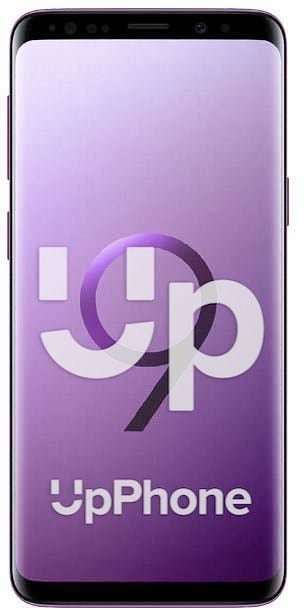
The Samsung Galaxy S9 64GB brought a flagship-grade Quad HD+ Super AMOLED display and the innovative variable-aperture camera to a refined design, powered by the Snapdragon 845 — one of the finest Android chips of its era.
Samsung's Galaxy S9 represented a thoughtful refinement of the Galaxy S8 formula, keeping the same gorgeous Infinity Display design while upgrading the internals and introducing one genuinely novel hardware innovation: a variable aperture rear camera. Released in March 2018, the 64GB model runs on Qualcomm's Snapdragon 845 — an octa-core chip with four performance cores at 2.8GHz and four efficiency cores at 1.7GHz — paired with 4GB of RAM and backed by the Adreno 630 GPU.
The 5.8-inch Quad HD+ Super AMOLED display delivers a staggering 568 ppi pixel density, one of the highest on any smartphone of its generation. Colors are vibrant, blacks are deep, and the display handles both indoor and outdoor conditions with finesse. The phone's IP68 certification — a step above the iPhone X's IP67 — means it can handle submersion in up to 1.5 meters of water for 30 minutes, offering genuine peace of mind around liquids.
The Galaxy S9 also supports expandable storage up to 400GB via microSD, a significant advantage over Apple competitors. Fast charging is on board, and the phone operates on 4G LTE across major carriers. Available in Midnight Black and Sunrise Gold, it remains a stylish Android flagship in a compact 147.7 x 68.7 x 8.5mm package weighing just 163 grams.
The Galaxy S9's 5.8-inch Quad HD+ Super AMOLED display is a showcase of Samsung's screen engineering. At 1440 x 2960 pixels and 568 ppi, it delivers sharper detail than virtually any display on the market at the time of release. Samsung's AMOLED technology produces perfect blacks, exceptionally wide color gamut coverage, and contrast that makes HDR content pop with impressive realism.
The Infinity Display design — with its gently curved edges and minimal bezels — creates an immersive viewing experience in a remarkably compact form factor. Whether streaming video, browsing the web, or gaming, the Galaxy S9 display consistently impresses.
The Galaxy S9's rear camera features a single lens with a variable aperture mechanism — a hardware feature borrowed from professional photography. The lens can switch between f/1.5 for low-light shooting and f/2.4 for bright conditions, allowing the camera system to adapt optically rather than relying purely on software processing. The 8-megapixel front camera handles selfies and video calls with solid performance.
The camera supports 8x digital zoom for distant subjects, and video recording is available at multiple resolutions. While it lacks the optical zoom of the iPhone X, the variable aperture gives it a distinct advantage in challenging lighting scenarios.
The Samsung Galaxy S9 supports fast charging, allowing users to recover significant battery capacity quickly from a wall adapter. The 22-hour 3G talk time figure speaks to strong real-world battery longevity for voice usage. For mixed workloads — browsing, social media, some video — the S9 handles a full day comfortably for moderate users.
The Qualcomm Snapdragon 845 was the definitive flagship Android chip of 2018. Its octa-core configuration — four Kryo 385 Gold performance cores at 2.8GHz and four Kryo 385 Silver efficiency cores at 1.7GHz — delivers strong sustained performance across demanding tasks including gaming, photography processing, and multitasking with 4GB of RAM.
The Snapdragon 845 also features a dedicated DSP for AI tasks, enabling intelligent camera processing, voice recognition, and other machine learning features. It remains a capable chip for everyday Android use, and many users continue to find it sufficient for their needs years after release.
The Galaxy S9 64GB ships with 64GB of onboard storage, and crucially, it also includes a microSD card slot that supports cards up to 400GB. This means the phone's effective storage capacity is far more flexible than any iPhone equivalent. Heavy media users can add a large card and keep photos, videos, music, and files locally without relying on cloud services.
Audio output on the Galaxy S9 delivers clear, capable sound from its speaker for media consumption and speakerphone calls. The 3.5mm headphone jack — which Samsung retained when competitors were removing it — means any standard wired headphones connect directly without an adapter, a convenience many users still value highly.
The Galaxy S9 includes biometric security options for quick and secure unlocking. A rear-mounted fingerprint sensor provides physical authentication, while face recognition offers an additional option using the front camera. Samsung's Intelligent Scan combines both iris scanning and face recognition for improved accuracy in varying lighting conditions, giving users multiple ways to authenticate based on their preference and environment.
The Galaxy S9 carries an IP68 certification — the highest common water resistance rating — meaning it is rated for dust protection and submersion in up to 1.5 meters of fresh water for 30 minutes. This exceeds the IP67 rating found on the iPhone X of the same era and provides genuine protection for situations beyond simple splashes, including accidental drops in sinks, pools, or puddles.